First off let us start with an advertisement. I have chosen this image from Tom's Shoes

https://jofads98.files.wordpress.com/2013/04/poverty-toms.jpg
The reason I have chosen this is because I have mixed feelings about Toms as a brand. On the one hand, they are trying their best to help but they are entirely misguided. Here is why first off if you look at this image it's in black and white. This gives a feeling of sadness, desolation, they are poor and need our help. They need our American Corporations to help them. These types of ads further the narrative that African people need our help, they are beggars for life, and they cannot survive without us. All of Africa is undeveloped and yadda yadda tons of other they are lower than us bullshit. Toms is one of those brands that turns these people into dependents because why would you buy shoes when the Toms truck gives them to you for free? So there would be no shoemakers, no shoe stores, and no job creation for these people to start developing. By giving away stuff for extended periods of time we are destroying jobs and an economy. But back to the point, this image is supposed to make you feel sorry for them, make you want to help, buy those shoes so that those poor children can have some.
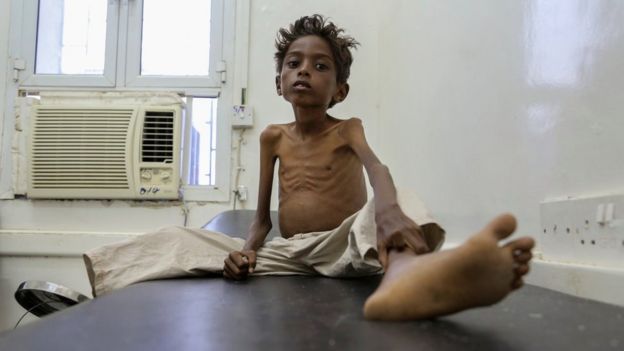
Now onto the Journalistic image. Taken from BBCs article UN: World Faces Greatest Humanitarian Crisis since 1945 is this image
http://www.bbc.com/news/world-africa-39238808
This picture is of a child in Yemen who suffers from severe malnutrition. Hunger in Yemen is a dire problem but lets analyze the image now, shall we? First off the boy is on a hospital bed it seems, in a dirty building, just look at the airconditioning unit in the window. This is not a sterile environment. The positioning of the child along with the lack of a smile bring forth feelings of sympathy for the child. We want to help him, we now have a face to the problem. We can now see how this problem is affecting others so we naturally want to help.
All in all both images sends out this message of helplessness. These people cannot help themselves so we must help them. Now in some cases, aid is needed. It is important to help others, but it is not ok to push a narrative that all of these people are helpless. That all of these people constantly need our aid.
